The Energy That Moves the World and the Soul
This book can also be acquired on Amazon:
https://amzn.to/4hEtWOW (paperback), https://amzn.to/4ALFXLk (Kindle edition), https://www.audible.com/pd/DRACULA-NEX-Sanguis-Ignis-The-Blood-of-Fire-Audiobook/B0FKSXGVYS (audiobook)
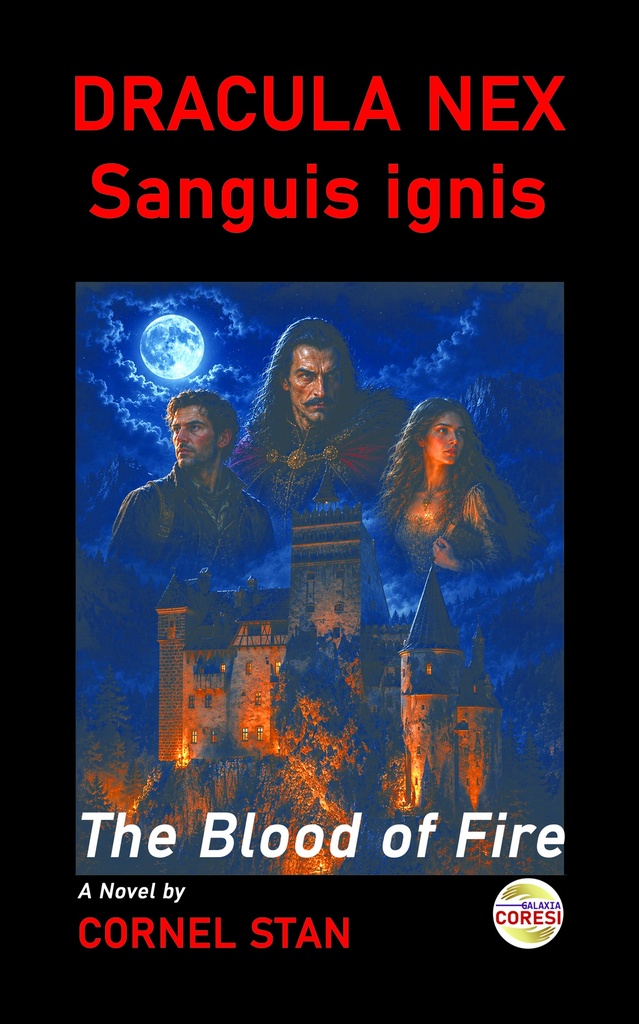
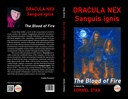
Dracula Nex: Sanguis Ignis. The Blood of Fire is a novel rooted in one of the most powerful figures in the Romanian and European imagination: Vlad the Impaler. Around this historical personality, the legend of Dracula gradually took shape. In Cornel Stan’s novel, that legend becomes a many-sided literary adventure: history, fairy tale, fantasy, irony, alchemy, science, eroticism, social satire, and a meditation on the energy that moves both the world and the human soul.
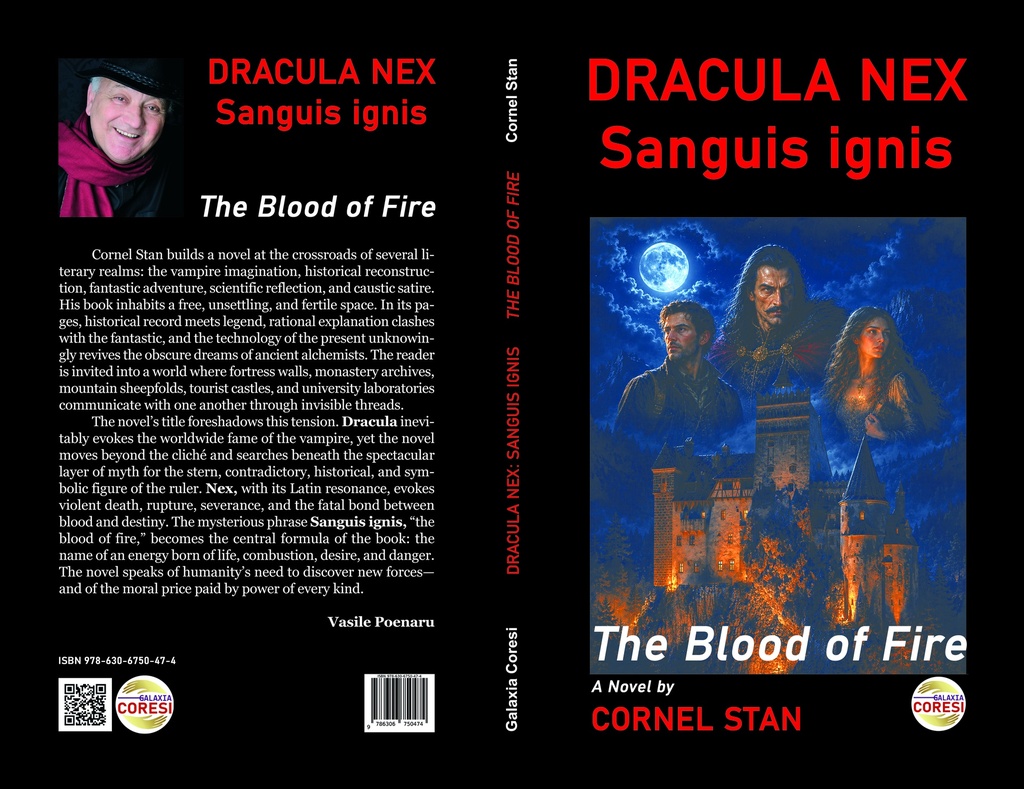
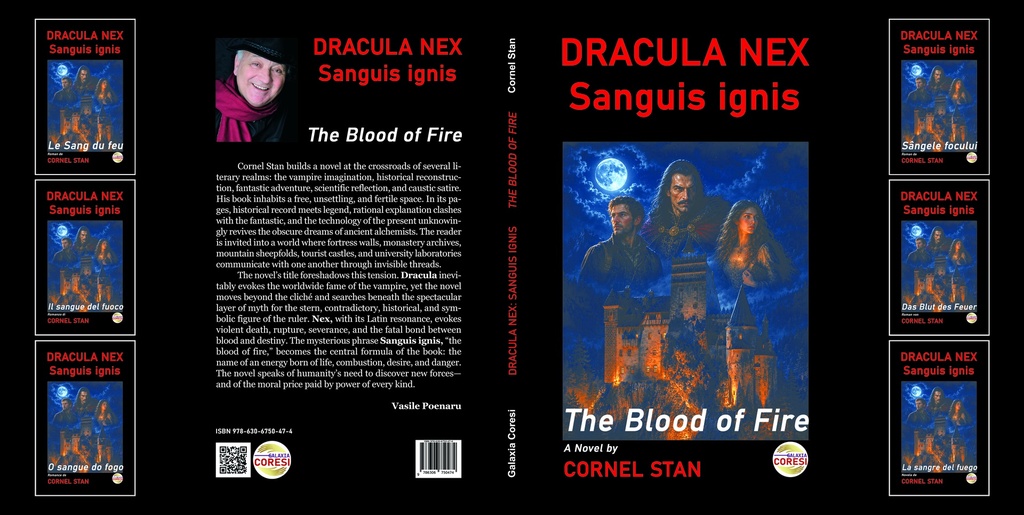
Cornel Stan builds a novel at the crossroads of several literary territories: the vampire imaginary, historical reconstruction, fantastic adventure, scientific reflection, and sharp satire. His book occupies a free, unsettling, and fertile space. In its pages, historical document meets legend; rational explanation collides with the fantastic; present-day technology unknowingly resumes the obscure dreams of ancient alchemists. The reader is invited into a world in which fortress walls, monastery archives, mountain sheepfolds, tourist castles, and university laboratories communicate with one another through invisible threads.
The title of the novel already suggests this tension. Dracula inevitably points to the worldwide fame of the vampire, but the novel moves beyond cliché and seeks, beneath the spectacular layer of myth, the harsh, contradictory, historical, and symbolic figure of the voivode. Nex, with its Latin resonance, evokes violent death, rupture, severance, and the fatal bond between blood and destiny. The mysterious expression Sanguis ignis, “the blood of fire,” becomes the central formula of the book: the name of an energy born of life, combustion, desire, and danger. The novel speaks about humanity’s need to discover new forces, and about the moral price that power of any kind demands.
The central character is a young researcher from the West, formed in the spirit of modern science and drawn to the possibility of an energy capable of changing the world. His foreign gaze allows the author to rediscover Romanian space with freshness and wonder: the Făgăraș Mountains, Poenari Fortress, Bran Castle, Corbii de Piatră, Neamț, Moldavia, and Transylvania become, from geographical places, stages of an initiation. The Romania of this novel is by turns harsh, comic, disturbing, fabulous, and deeply archaic, while at the same time preserving a living, restless energy that resists simple formulas.
History is brought down from the textbook and returned to the urgency of the present. Vlad the Impaler, Mehmed II, Matthias Corvinus, Stephen the Great, the Saxons of Brașov, mountain passes, customs posts, monasteries, alchemists, and fortresses appear as forces that continue to trouble the present. History does not remain behind us; it returns, insinuates itself, questions, provokes, sometimes mocks, and sometimes threatens. Cornel Stan has a keen sense of historical detail, but also the freedom to carry it toward fiction, charging it with humor, tension, and mystery.
At the same time, the novel is crossed by a question that is profoundly contemporary: where does the energy of the world come from, and what price do we pay for it? Fossil fuels, hydrogen, alcohol, fire, blood, electricity, propulsion, machines, and rockets enter into an unexpected dialogue with medieval alchemy. What the old masters called “spirits” becomes, for the modern mind, gas, fuel, reaction, propulsive force. But the novel is not satisfied with a technical explanation. It asks what happens when energy is separated from responsibility, when the desire for power begins to dominate human measure and moral judgment.
The tone of the book alternates naturally between gravity and comedy. Mountain scenes, meals with bacon, cheese, țuică, and sausages, lively dialogues, ironies directed at mass tourism, university bureaucracy, or ready-made public discourse—all give the novel a remarkable narrative texture. The fantastic does not descend solemnly upon the text; it often enters through the door of laughter, drunkenness, confusion, a phone app that seems to know too much, or an event the mind refuses to accept entirely.
Dracula Nex: Sanguis Ignis: The Blood of Fire can be read as an adventure novel, an intelligent parody of the Dracula myth, a meditation on science, a historical fantasy, and a story about the temptation to go beyond the human condition. Beyond all these, however, it remains a book about choice: between body and spirit, between blood and energy, between legend and truth, between escaping the world and fighting within it.
The publishing house offers readers this novel as a vivid, unsettling, and imaginative journey into a territory where the past remains alive, myth keeps its meaning, and fire—whether the fire of history, love, or knowledge—continues to ask of human beings courage, lucidity, sound judgment, and measure.
Vasile Poenaru